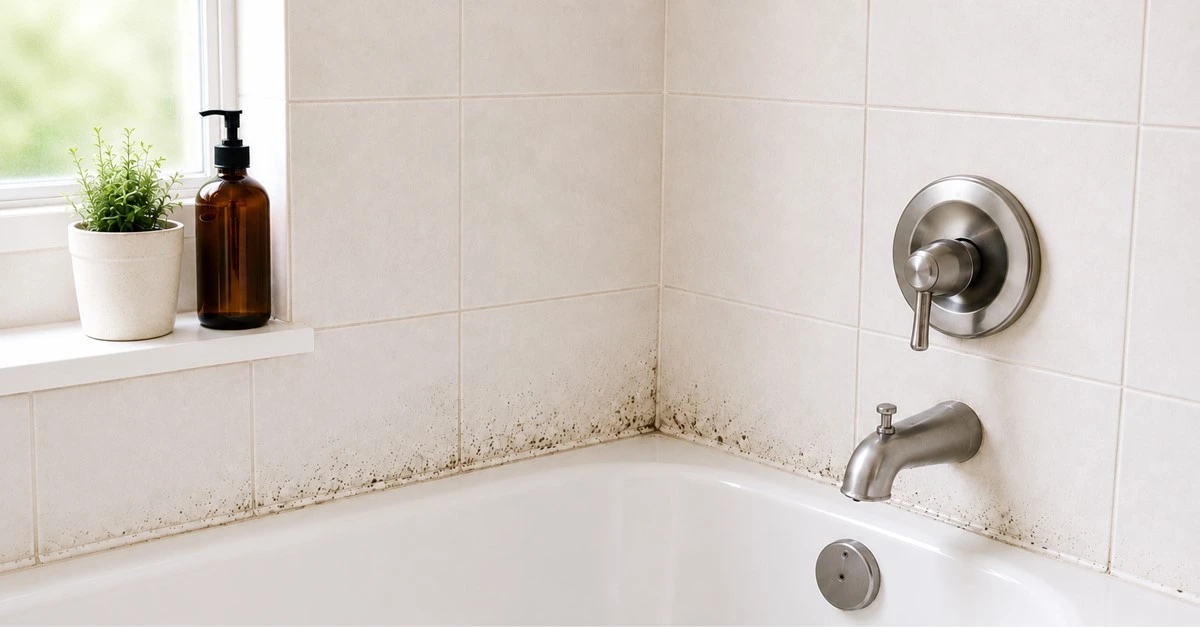
Bathroom mold keeps coming back even after cleaning because moisture stays inside the room long after the visible surface dries. The dark marks may clear from tiles or ceilings for a short period, yet dampness still remains inside grout, silicone, painted walls, and enclosed corners near the shower or sink.
Warm air and steam collect quickly inside bathrooms. Water settles across ceilings, tile joints, mirrors, and fixtures after each shower. In enclosed bathrooms, the air stays heavy for longer periods, especially around corners and areas with slower airflow. Many routines connected with the wider Bathroom Cleaning category focus on reducing lingering dampness throughout the room.
Damp Air Settles Back Into The Same Areas
Steam rises during showers, then settles slowly across the bathroom afterward. Grout lines, ceiling corners, silicone edges, and window frames hold moisture longer than open surfaces. The floor may dry first while enclosed areas remain damp underneath.
The same sections of the bathroom receive moisture repeatedly each day. Mold returns there because those surfaces rarely stay fully dry for long.
Areas that usually remain damp longer include:
- Ceiling corners above showers
- Grout near bathtubs
- Silicone around sinks
- Window edges
- Bath mats
- Towels hanging close together
- Spaces behind bottles or containers
Bathroom Airflow Stays Limited In Small Spaces
Bathroom fans remove part of the steam, though humidity still settles across walls and ceilings afterward. In smaller bathrooms, warm air remains trapped inside the room longer after showers finish.
Closed doors slow air movement further. Bathrooms without windows usually hold heavier air because fresh air can pass through more easily.
This type of daily moisture buildup aligns with routines under the Eco Cleaning pillar, where airflow, surface care, and moisture balance help bathrooms stay fresher naturally.
Grout And Silicone Continue Holding Moisture
Bathroom materials absorb small amounts of water repeatedly throughout the week. Grout, silicone, textured paint, and ceiling surfaces gradually hold dampness below the visible surface.
Dark marks return to the same spots because those sections continue receiving moisture after each shower. Older grout and cracked silicone are usually the first to show these marks.
The surface may appear clean for several days while moisture remains underneath. Ceiling paint near the steam slowly changes appearance, grout darkens again near shower edges, and silicone loses its cleaner look around sinks and bathtubs.
Cleaning Clears The Surface While Humidity Remains
Bathroom cleaners remove visible mold from tiles, ceilings, and grout. The room smells cleaner afterward, and the darker marks fade from view. Steam and damp air continue to collect inside the bathroom during daily use.
Moisture settles back into the same enclosed areas after each shower. The same ceiling edge or grout line gradually darkens again because the room continues holding humidity there.
This repeated moisture pattern usually becomes visible first around corners, joints, and enclosed edges rather than on open walls or floors.
Regular moisture care also connects naturally with routines inside the Bathroom Cleaning section, where surfaces stay cleaner through steady drying and gentle maintenance.
Daily Moisture Patterns Shape Bathroom Surfaces
Wet towels, steam sitting inside the room, water around fixtures, and closed shower doors all add extra dampness to enclosed bathroom spaces.
Ceiling corners are beginning to show faint discoloration again. Silicone loses its cleaner appearance. Grout near the shower darkens gradually along the edges.
Bathrooms that dry more fully between showers usually stay clearer around grout lines, ceiling corners, and silicone edges. The air feels lighter inside the room, surfaces maintain a cleaner appearance longer, and dark patches return less frequently in the same areas.