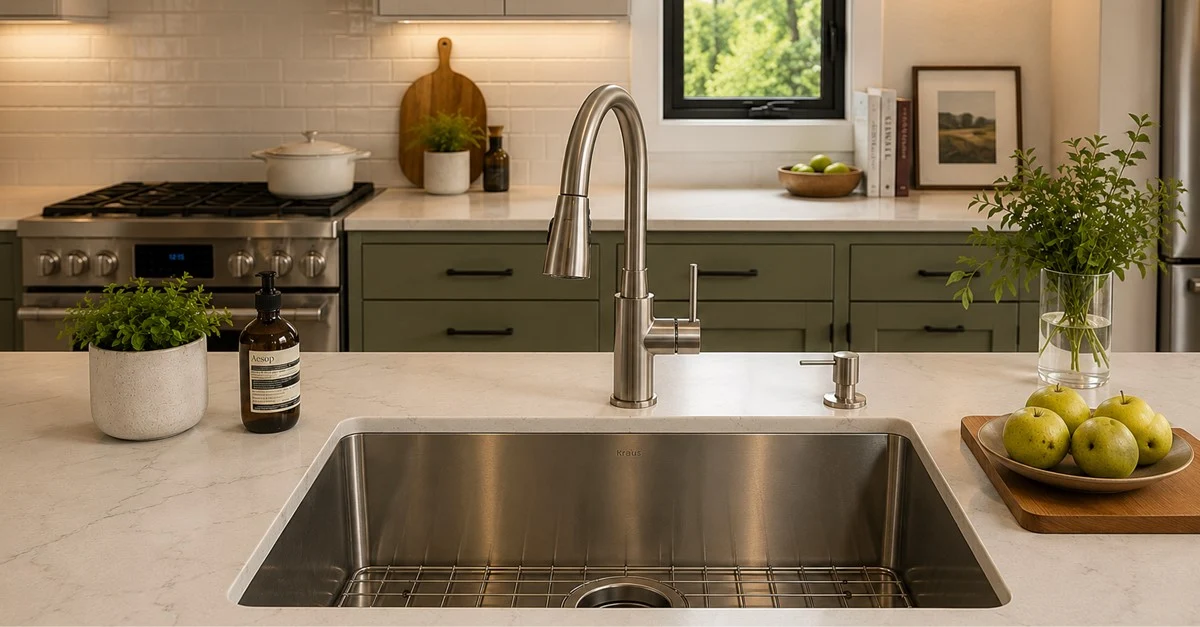
The kitchen sink carries more than water throughout the day. Small food particles, soap residue, coffee stains, and moisture gradually settle into the surface. The change often appears first around the drain, along the edges, or near metal fixtures, where buildup tends to accumulate more easily. To clean a kitchen sink naturally, gentle ingredients are often enough to loosen everyday residue and reduce dull odor without leaving heavy chemical scent behind. A sink may still look clean from a distance while carrying a faint smell underneath.
Natural cleaning works well here because the surface is used constantly. Strong chemical products often leave a sharp scent that lingers on dishes, counters, and food-preparation areas. Gentle ingredients clean the sink without altering the kitchen’s feel. Many of these everyday routines also naturally connect with the wider Kitchen Cleaning category, where surfaces are cleaned regularly without leaving heavy residue.
What Causes Odor And Buildup In A Kitchen Sink
Most sink odor begins below the visible surface. Small layers of grease, soap, food particles, and moisture collect around the drain opening and inside the pipe walls. Warm water passes through daily, but thin residue often remains behind.
Buildup settles more easily in areas that stay damp longer or are constantly contacted throughout the day. The drain opening and metal strainer usually collect the heaviest residue first. Corners and sink edges hold moisture after rinsing, while the area around the faucet base often traps small mineral spots and soap film. In some sinks, overflow openings and rubber seals near the fittings also retain moisture, which gradually affects the smell.
Stainless steel sinks also lose their brightness when mineral spots and soap film stay on the surface too long. The change is gradual. The sink begins to look cloudy instead of reflective.
A Simple Natural Method To Clean A Kitchen Sink
Warm water and a few gentle ingredients are usually enough for regular sink cleaning. The surface responds better to steady care than aggressive scrubbing.
1. Rinse Away Loose Residue
Start with warm water to clear away crumbs and loose particles. Use a soft cloth or sponge to wipe the surface lightly before applying any cleaner.
2. Sprinkle Baking Soda Across The Sink
Lightly cover the damp sink with baking soda. Pay attention to the corners, drain area, and around the faucet where buildup collects more often.
Baking soda lifts residue gently without scratching most sink surfaces.
3. Scrub With A Soft Sponge Or Cloth
Use small circular movements across the surface. The texture of baking soda helps loosen dull film and water marks without leaving the sink rough afterward.
For stainless steel sinks, wiping along the grain helps maintain a cleaner finish.
4. Use Vinegar Around The Drain Area
Pour a small amount of white vinegar around the drain and over areas with odor or mineral buildup. Light bubbling appears as it reacts with the baking soda.
Leave it for a brief time before rinsing with warm water.
This type of gentle surface cleaning is often used in everyday areas of the home, especially within the broader Eco Cleaning pillar, where simple ingredients are used more carefully in frequently touched spaces.
5. Dry The Sink Fully
A dry cloth changes the final result more than most people expect. Water left behind allows spots and dull marks to return quickly, especially on stainless steel surfaces.
Drying the sink also helps reduce lingering moisture around the drain edges and fixtures.
How To Remove Strong Sink Odor Naturally
Some odors remain even after the visible surface looks clean. In many kitchens, the smell lingers deeper in the drain opening, where residue stays damp longer.
A simple natural rinse usually helps clear the heavier residue that’s built up inside the drain. Hot water poured slowly into the opening softens the buildup first. Adding baking soda afterward helps loosen trapped residue along the inner surface. A small amount of white vinegar creates a light reaction that moves through the drain area more deeply before everything is flushed again with warm water.
Lemon peel can also freshen the drain lightly afterward. The scent feels cleaner without becoming overpowering inside the kitchen.
Surfaces And Materials That Need Gentler Care
Not every sink surface responds the same way to acidic ingredients. Stainless steel usually handles diluted vinegar well during routine cleaning, but natural stone sinks require more care.
Avoid using vinegar regularly on:
- Marble sinks
- Limestone surfaces
- Unsealed stone
- Certain painted finishes around sink areas
Acidic cleaners may slowly affect the surface clarity or finish. This becomes more noticeable around polished stone and coated materials. Similar care is often needed across other household surfaces where vinegar is not always suitable for regular cleaning.
Keeping The Sink Cleaner Between Deep Cleans
A kitchen sink stays fresher when residue is removed before it has a chance to settle fully. Small habits during the day usually prevent heavier buildup later.
Food scraps washed away earlier in the day are less likely to remain around the drain opening overnight. Standing water left in the sink often leaves mineral marks and allows damp residue to sit longer on the surface. Around the faucet base, small droplets and soap film accumulate gradually over time, especially in busy kitchens where the sink is used constantly.
A quick wipe before the evening helps remove moisture from the surface, preventing spots from forming again. Sink strainers also hold more residue than they appear to at first glance, especially underneath and around the edges, where water passes repeatedly during the day.
The sink begins to hold less odor when moisture and residue are interrupted more often during normal kitchen use.
By the end of the day, the surface feels lighter again — not polished in an artificial way, but clear, dry, and settled back into the quiet rhythm of the kitchen.