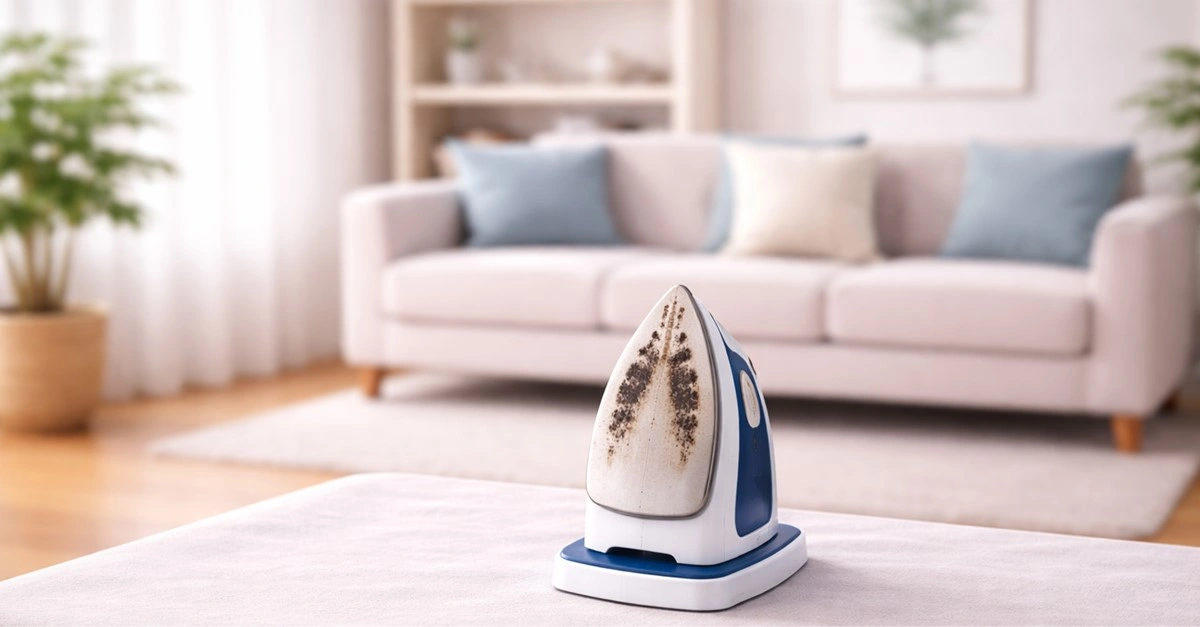
Black marks on an iron soleplate usually come from regular use. Heat, fabric, and repeated contact leave small deposits on the surface. A slightly high temperature setting, ironing over synthetic material, or using starch can create a thin layer that stays on the soleplate.
At first, the change is small. The iron still works, but the surface does not feel completely smooth. The movement becomes slightly heavier. With continued use, the marks become visible, and the iron may begin to leave faint stains on clothes.
Knowing how to remove black marks from an iron soleplate naturally helps clear them without affecting the surface finish. The buildup sits on the outer layer, so it can be removed with simple methods when handled carefully.
What Causes Black Marks On An Iron Soleplate
The soleplate comes into direct contact with fabric during every use. This creates conditions where residue can collect and settle.
Synthetic fabrics are one of the most common causes. When exposed to high heat, they can soften and stick lightly to the soleplate. Starch forms a thin coating that builds with repeated application. Dust and lint can burn onto the surface when the heat is high.
These deposits form in thin layers. Each layer builds up on the surface until the soleplate no longer feels smooth. As the buildup increases, it affects how iron moves and interacts with fabric.
Marks on the soleplate are usually not permanent damage. They are surface deposits that can be cleared when handled correctly.
Cleaning approaches like this often sit within broader routines found in Eco Cleaning, where surfaces are cared for without relying on harsh products.
Start With The Right Condition
Before cleaning, the iron should be unplugged and allowed to cool until it is warm to the touch. This condition makes a clear difference in how easily the residue can be removed.
A hot surface dries cleaning materials quickly, making them harder to work with. A completely cold surface keeps the buildup firm. A slightly warm soleplate allows the residue to loosen without resistance.
Place the iron on a steady, protected surface. Keep a soft cloth ready for wiping. The coating on most soleplates is designed to remain smooth, so it should not be exposed to rough materials.
1. Baking Soda Paste For Basic Cleaning
Baking soda is a reliable option for general cleaning.
Mix a small amount with water until it forms a soft paste. The texture should be smooth, so it spreads evenly across the surface. Apply the paste gently over the black marks, covering the affected areas without pressing down. Simple mixtures like this reflect the kind of everyday solutions often used across All-Purpose Cleaners, where a few basic ingredients handle a wide range of cleaning needs.
Leave it in place for a few minutes. This gives the residue time to soften. When wiped away with a damp cloth, the marks begin to reduce. Some areas may clear completely, while others may still show slight discoloration.
Repeating the same step allows the remaining marks to lift. It is better to work in layers than to apply force. This keeps the soleplate surface intact.
2. Vinegar To Remove Residue
After cleaning with baking soda, a thin layer can still remain on the surface. It may not be visible, but it affects how the soleplate feels.
A soft cloth lightly dampened with white vinegar can be used to wipe the soleplate while it is still slightly warm. The vinegar helps remove this remaining layer.
As the cloth moves across the surface, the soleplate becomes smoother. This step helps restore the iron’s glide and prepares the surface for regular use.
3. Salt Method For Stubborn Marks
Some marks remain even after wiping. These are usually slightly raised and come from burnt material.
Spread a thin layer of salt on a sheet of paper. Set the iron to a low heat setting without steam. Move the iron slowly over the salt.
This contact helps loosen the buildup. There is no need to press down. The movement allows the residue to release from the surface.
Afterward, wipe the soleplate with a damp cloth to remove any remaining salt particles.
4. Lemon For Light Cleaning
Lemon can be used when the marks are light or when maintaining a clean surface.
Cut a lemon and rub it gently over the slightly warm soleplate. The natural acidity helps break down minor residue.
After application, wipe the surface with a damp cloth and dry it properly. This keeps the surface clear without affecting the coating.
Clean Steam Holes To Prevent Marks Returning
The soleplate surface may look clean while residue remains around the steam holes. These small areas can hold buildup that later transfers onto fabric.
A cotton swab dipped in a small amount of vinegar can be used to clean around each opening. This removes trapped residue without affecting the iron’s internal parts.
Care should be taken to avoid inserting anything sharp into the holes.
What To Avoid When Cleaning An Iron Soleplate
Certain cleaning methods can damage the soleplate even if they appear effective.
- Metal scrubbers or steel wool can scratch the surface.
- Dry abrasive powders can wear down the coating.
- Sharp tools can leave permanent marks.
- Excess water can enter the iron and affect its function.
Keeping the surface smooth is important for long-term performance.
Simple Habits That Keep The Soleplate Clear
Once the soleplate is cleaned, it tends to remain in good condition with careful use.
Using the correct heat setting for each fabric prevents overheating. Avoiding direct contact with prints or coated materials reduces the chance of residue forming. A quick wipe after use, while the iron is still warm, helps remove any early buildup.
This kind of simple maintenance fits naturally within broader home routines often connected to Smart & Sustainable, where small, consistent actions keep everyday tools working without disruption.
A Surface That Works As Expected
A clean soleplate changes how the iron feels during use. The movement becomes smooth, and the fabric is pressed evenly, leaving no marks.
Knowing how to remove black marks from an iron soleplate naturally keeps the process simple. The surface can be restored without strong products or aggressive cleaning.