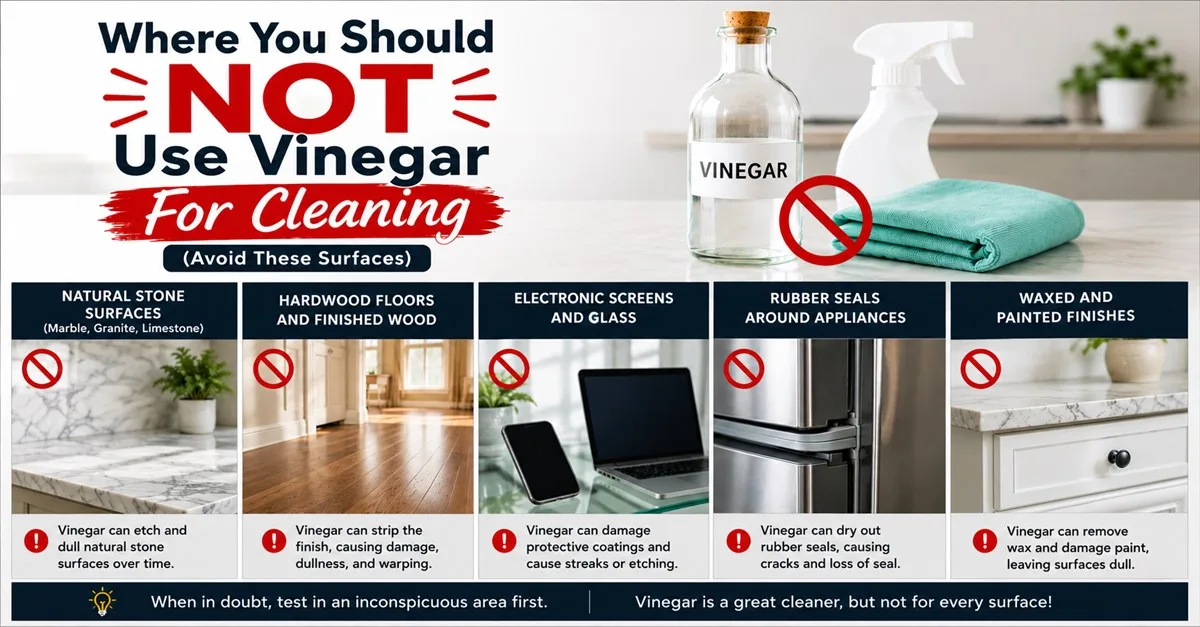
Where you should not use vinegar for cleaning becomes easier to notice across delicate finishes and sealed materials used every day around the home. Vinegar is used in many natural cleaning routines because it quickly removes light residue from sinks, taps, glass, and bathroom areas. It is often used without much thought during everyday wiping and mopping.
Some finishes handle vinegar differently. The first signs are usually small. Stone loses some of its clear reflection near taps. Wood no longer reflects light evenly across the grain. Coated screens begin showing fingerprints more easily during daytime use.
These changes are more noticeable in finished materials and sealed areas, especially around surfaces cleaned often with homemade sprays and mixtures commonly discussed through the All-Purpose Cleaners routines used for regular home care.
Natural Stone Surfaces
Marble, limestone, travertine, and some granite surfaces do not sit well with repeated vinegar cleaning. Near sinks and counters, the stone begins looking softer in direct light. Darker areas lose some of their depth first. Around taps, polished sections no longer reflect evenly beside the untouched stone nearby.
Cloudy patches sometimes appear where wiping happens several times each day. Warm water and mild soap usually leave natural stone looking steadier without disturbing the polish.
Hardwood Floors And Finished Wood
Finished wood carries a thin protective layer across the grain. Frequent vinegar wiping slowly wears against that finish, especially across busy walkways and dining areas.
Some floor sections are beginning to look flatter than the surrounding wood. Table edges and cabinet corners lose part of their smooth appearance after repeated cleaning. The difference becomes easier to notice during daylight, particularly across darker wood tones.
Gentler cleaning methods usually leave wood looking more even across daily routines, as part of the Eco Cleaning approach to natural home care.
Electronic Screens And Glass
Phones, tablets, televisions, and laptops have thin outer coatings on their glass. Repeated vinegar cleaning gradually weakens that smooth layer. Bright reflections spread more sharply across the screen. Fingerprints cling more easily, rather than wiping away cleanly with a cloth.
Some coated mirrors and specialty glass show similar marks after months of frequent wiping. For everyday dust and fingerprints, very little is usually needed beyond a soft microfiber cloth with light moisture.
Rubber Seals Around Appliances
Rubber seals around washing machines, refrigerators, and dishwashers are constantly under pressure from movement, moisture, and heat.
Corners and folded edges sometimes feel stiffer after repeated vinegar cleaning. Small cracks appear more easily around sections opened throughout the day.
These areas usually hold up better with softer cleaning methods and lighter wiping. This is one reason many natural routines avoid vinegar for cleaning delicate appliance parts and flexible seals.
Waxed And Painted Finishes
Waxed furniture and painted cabinets usually need very little. Repeated wiping slowly removes some of the softer finish from corners, handles, and edges that are touched regularly throughout the day. Certain painted sections begin reflecting light differently beside the surrounding area.
Older furniture often shows these marks first, especially in areas already exposed to sunlight and to regular handling. A lightly damp cloth is usually enough for daily cleaning across painted and waxed finishes.
What To Use Instead Of Vinegar
Delicate finishes usually respond better to lighter cleaning. A few gentler options include:
- Mild soap mixed with warm water
- Microfiber cloths for fingerprints and dust
- Damp cloth wiping for painted finishes
- Dry polishing for coated screens and mirrors
- Gentle cleaning around rubber seals and finished wood
Vinegar still works well for mineral residue, glass, and some bathroom buildup. Some finishes hold their texture longer when the cleaning itself stays light.