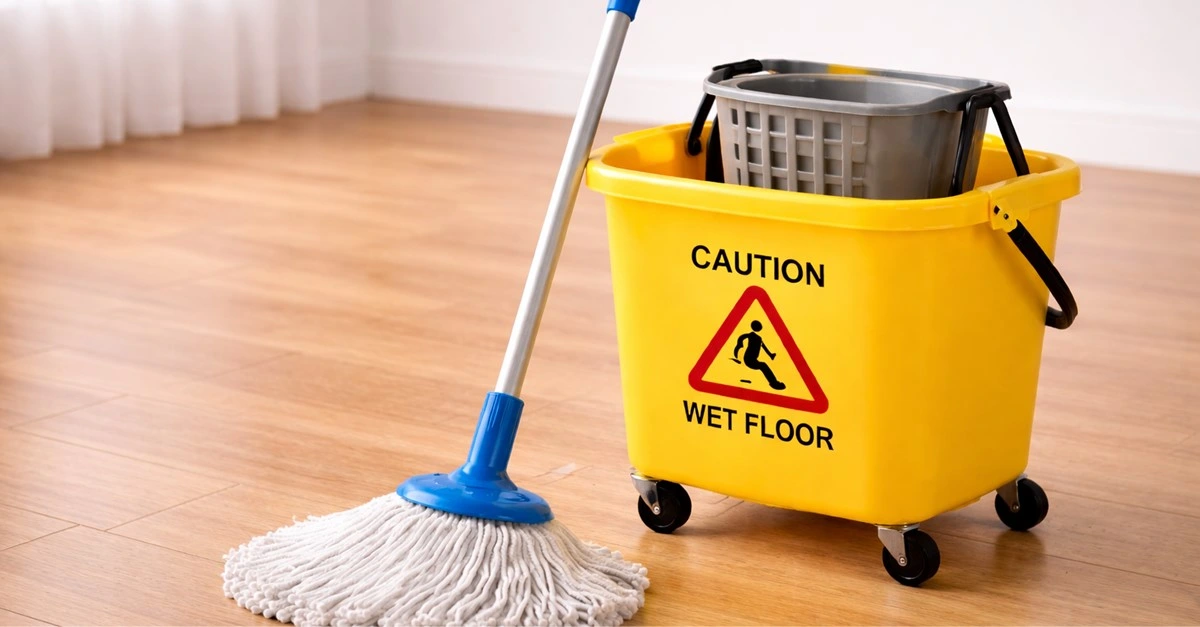
After mopping, the floor dries and looks clean. The surface appears even, with no visible marks left behind. Later, when you walk across it, it feels slightly sticky.
It is easier to notice when walking barefoot. The floor does not feel dirty, but it does not feel smooth either. The difference is small, but it becomes clear once you move across the room.
You may start to wonder why floors feel sticky after mopping, even though the cleaning has already been completed.
What Causes Sticky Floors After Mopping
When the floor is mopped, water spreads across the surface and begins to dry. Along with the water, small amounts of cleaner, soap, and fine particles settle across the floor.
After drying, these do not fully disappear. A thin layer remains on the surface. It is not always visible, especially on smooth flooring, but it changes how the floor feels underfoot.
A kitchen floor, for example, may look completely clean after mopping. Still, when you walk across it, there is a slight drag underfoot. That change comes from the layer left behind after the water dries. The same surface shows why floors feel sticky after mopping.
Using Too Much Cleaner When Mopping
It is easy to add extra cleaner, especially when the floor looks heavily used. A stronger mixture may seem likely to yield better results.
Most floors do not require much cleaning for regular cleaning. When more is used, it spreads across the surface, making it harder to remove completely.
As the floor dries, part of that cleaner remains. It forms a light coating that affects the surface’s feel. The floor may still look clean, but the finish feels slightly different underfoot.
A small amount of cleaner usually spreads evenly and lifts what is on the surface. When the amount increases, the water carries more than needed and leaves more behind after drying.
This can be noticed after the floor has fully dried. The surface appears the same, but the feel changes slightly with each step.
Soap Residue Left On Floors After Mopping
Soap helps loosen dirt and grease so it can be lifted during cleaning. After that, it needs to be cleared along with the dirt.
If the floor is not properly rinsed, some soap remains. When the water dries, it forms a thin film on the surface.
This film is not always easy to see, but it changes how the floor feels under your feet.
Even a small amount of leftover soap can affect the finish. The surface may feel slightly sticky when you step across it, especially after the floor has fully dried.
It can occur even when using mild cleaning products. A proper rinse helps remove this layer, restoring the surface to a smoother feel.
Dirty Mop Water During Cleaning
At the beginning, the water in the bucket is clean. As cleaning continues, the mop carries dirt and cleaner back into the same water.
Over time, the water becomes cloudy. If it is still used, it spreads a light layer across the floor instead of removing it.
In larger rooms, the last section is often cleaned using water that is no longer clear. This leaves behind a thin residue after drying.
The change is gradual and may not be noticed during cleaning. By the end, the water holds more than it removes.
Using the same water for too long means the surface is being wiped with a mixture that already contains the earlier lift.
After drying, this leaves a light coating that can be felt underfoot. By the end, the floor shows why floors feel sticky after mopping.
Hard Water Residue After Mopping
Water used for mopping may contain small amounts of minerals. These are not visible when the water is in the bucket, but they remain on the floor after it dries.
As the surface dries, these minerals settle across it in a very thin layer. The layer is not easy to notice at a glance, especially on smooth flooring.
It becomes more noticeable through touch. The surface may feel slightly different when you walk across it, even if no cleaner has been used in excess.
The effect can vary depending on the water source. Some floors may show it more clearly than others, depending on the surface and how often they are cleaned.
A simple rinse with clean water can help reduce this layer and bring back a smoother feel.
Using Different Cleaners On Floors Over Time
Cleaning is not always done using the same product. At times, a floor cleaner is used; on other occasions, a different type of cleaning liquid is mixed with water.
Each product leaves a small amount on the surface after use. These amounts are not noticeable after one cleaning.
With repeated use of different products, these small layers accumulate. The change happens slowly and may not be noticed at first.
The surface continues to look clean, but the feel underfoot changes slightly. The finish is no longer as smooth as before.
Using a single product and maintaining a consistent cleaning process helps keep the surface clearer after drying.
How To Fix Sticky Floors After Mopping Naturally
To remove the sticky feeling, the surface needs to be cleaned of any remaining residue after drying.
Mop the floor again using clean, warm water. Do not add cleaner. This helps lift the thin layer left on the surface.
It is helpful to change the water during the process. Once the water becomes cloudy, it should be replaced to avoid spreading the same residue again.
Using a clean mop also makes a difference. A mop that already holds residue can transfer it back onto the floor.
If needed, a small amount of vinegar can be mixed with water. This can help clear soap from the surface without leaving an additional layer.
After the first rinse, a second light pass with clean water can improve the result. This helps remove anything that may still remain after the first cleaning.
Allow the floor to dry fully before checking the surface. Once dry, the change in feel becomes easier to notice.
How To Prevent Sticky Floors After Mopping
These small changes help prevent the same issue from coming back after cleaning. Once the floor feels smooth again, keeping the cleaning process simple helps maintain that result.
Use a small amount of cleaner during regular mopping. Adding more than needed increases the chance of leaving a light layer after drying.
Changing the water during cleaning helps keep it clear. When the water becomes cloudy, replacing it prevents the residue from spreading again.
Rinsing the mop during use also helps. A clean mop leaves less residue on the floor.
Cleaning smaller sections at a time can make the process easier to manage. This allows better control over how much water and cleaner are used.
Keeping the process consistent helps the surface stay smooth after each cleaning. This helps avoid why floors feel sticky after mopping during regular cleaning.
When The Floor Feels Right Again
After the remaining layer is removed, the change in the floor is clearly visible.
Walking across the surface feels smooth, without any drag underfoot. The floor does not feel sticky when moving from one area to another.
The surface no longer draws attention. It feels consistent across the room, without any difference in texture.
This makes it easier to maintain the same result with regular cleaning. A simple and steady approach helps keep the floor in this condition.
Sticky Floors After Mopping: Final Result
A floor can look clean and still feel slightly sticky after mopping.
Once the remaining layer is removed, the surface feels smooth again and stays that way with simple cleaning.
Walking across the floor no longer feels different from one step to the next. The surface feels even, without any light grip underfoot.
With a simple and consistent cleaning method, the same result can be maintained after each cleaning.